- Combine Major Scale Patterns 1 and 2 in a single key. It lets you hit all the right notes with ease. Apply this across a wider fretboard range without overthinking.
- STEP 1: REVIEW & PRACTICE – Review how Major Scale Patterns 1 and 2 connect so they stay in the same key. Pattern 1 begins on the keynote, and Pattern 2 begins two frets above that keynote. Start practicing by finding the note A on your low G string (the thick pair of strings). This will be your keynote. Play Pattern 1 up and down from that note. Then slide up two frets and play Pattern 2 the same way.
- STEP 2: EXPLORE – Next, practice moving between Patterns 1 and 2 without using a backing track. Begin Pattern 1 on the A at the 2nd fret. To build smoothness, use the D, A, and E strings to slide back and forth between the two patterns. Try jumping “up” into Pattern 2 or “down” into Pattern 1 on each string so you can clearly see how the two patterns connect. Don’t worry about perfection—just explore and then move on.
- STEP 3: IMPROVISE – Now go to YouTube and find a slow backing track in B Major. Play the track and practice blending Patterns 1 and 2. Since you’re in B Major, start Pattern 1 on B at the 4th fret of the G string. Don’t focus on sounding impressive right now. You’re simply exploring how the two patterns mix. Jump up to Pattern 2, experiment a bit, then jump back down into Pattern 1. Try switching between them on each string, one at a time. Listen closely and let your ear guide you. Most importantly—have fun.
- STEP 4: CHANGE KEYS – Repeat this process in the keys of C Major and D Major. Keep it light, enjoy the exploration, and we’ll continue building these skills in the lessons ahead.
Backing Tracks
Bonus #1
This is a bonus for you to use to learn more about major key roots. I am offering this to you only if and when you have already learned to use the two patterns without looking! If you are at that point, study the charts below. Then use the charts to improvise while learning the sound of the root notes and remembering where they are.
Below is an image that may help a bit when improvising. It shows an extra bit of information.
- All notes colored in green indicate the roots, or keynotes for major keys.
- When you connect these patterns and improvise within them, you will be playing across 9 full frets of your mandolin.
- Take your time improvising in the lessons above. Learn where the major scale keynotes are found in the connected patterns and pay attention to the feeling these notes conjure up as you practice.

Bonus #2
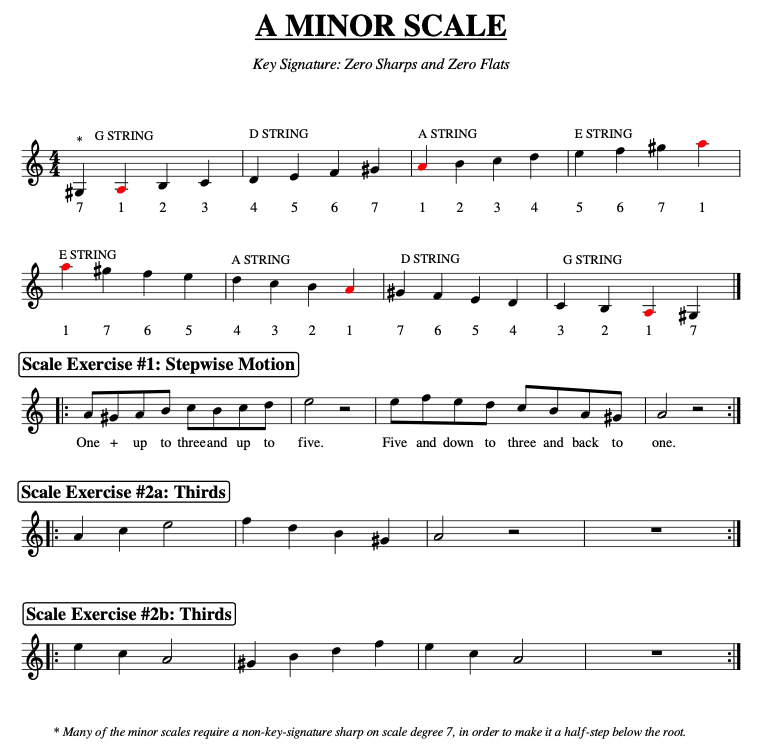
The following is a special bonus for the enterprising over-achievers among you to use to learn more about minor key root notes.
Remember, you must move these major scale patterns up three frets from the major key in order to play in the parallel minor key.

Bonus #3
 Feed Your Head:
Discover more from The Amateur Mandolinist
Subscribe to get the latest posts sent to your email.