Start With Major Scale Pattern 1
Discover ↓
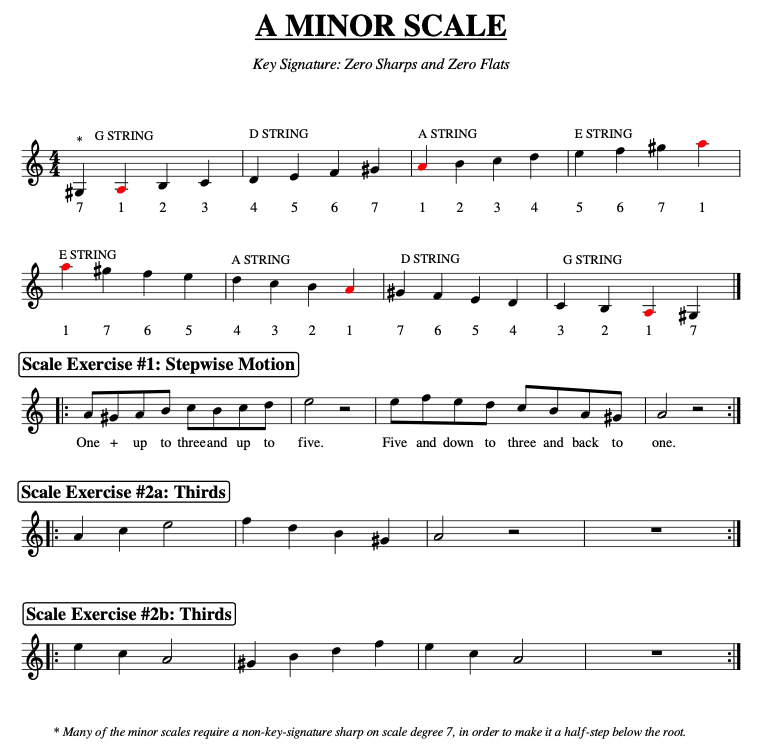
- Here is a convenient scale pattern: Major Scale pattern 1. You can use it to solo or improvise in any major or minor key.
- This pattern is also the first “building block” of the entire fundamental mandolin framework.

Do This → Action Steps
- STEP 1: WATCH the entire video first, just to get an overview of what the scale pattern looks like when played.
- STEP 2: REMEMBER. Use the scale chart to play the pattern yourself – do NOT focus on trying to make your playing “perfect” – in this step, all you want to do is focus on “memorizing” this scale pattern without having to look at the chart.
- STEP 3: PRACTICE the scale carefully. After you have memorized it, play Major Scale Pattern 1 from the lowest note to the highest note, then backwards from the highest note to the lowest note, exactly as shown in the video. DO NOT GO FAST. Try to relax and make each note sound good. Continue playing this scale pattern without looking at the scale chart until your hand starts to feel “reasonably comfortable” playing the scale pattern. Again, DO NOT TRY TO MAKE IT PERFECT – you will only hold up your progress. Good enough is good enough – then move on to the next step.
- STEP 4: NOODLE around. This means to play around with the notes of the pattern but not in order. Just play in random order a bit, then try to make up a few small 2, 3, 4, or 5 note phrases that sound good to you.
- STEP 5: IMPROVISE. Start Major Scale pattern 1 on the 2nd fret (of your low G course – the fattest 2 strings), and practice improvising over the track below. I know you don’t yet know what you’re going to play. That’s the point! Just hit play on the track below and explore the notes in Major Scale pattern 1 to see what sounds good. As long as you start the pattern on the 2nd fret, it will all sound reasonably good! Don’t worry about playing the notes in order. Skip around, explore, just have fun and jam out! Repeat this step as much as you want (you’re going to have some fun), then move on.
↑ A Major Rock/Pop – slow – 70 bpm ↑
Discover more from The Amateur Mandolinist
Subscribe to get the latest posts sent to your email.